AI Receptionist for Houston Service Businesses: A 2026 Local Guide
What Houston's size, growth, language mix and storm seasons mean for how a service business answers its phone, using Census, city, BLS and National Weather Service data instead of invented local benchmarks.
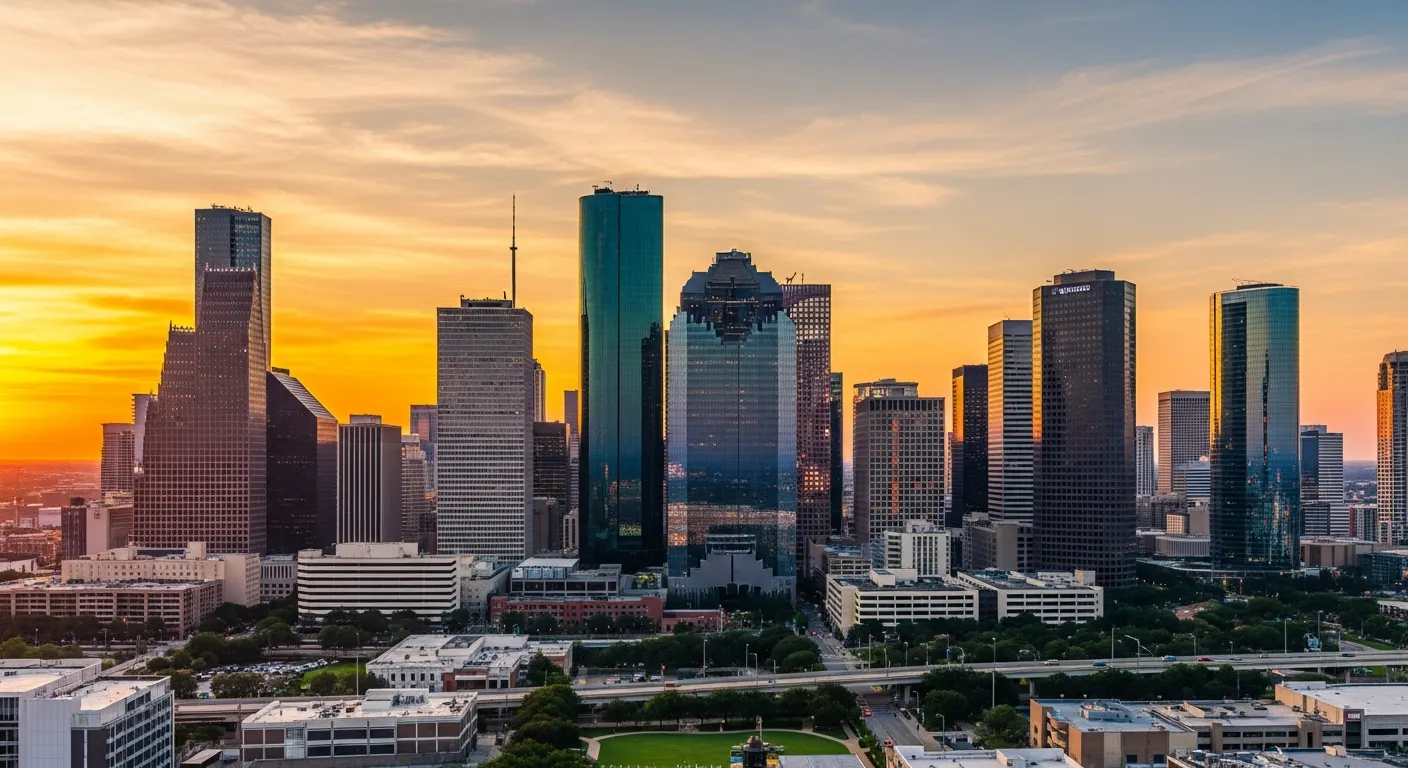
For a Houston service business, an AI receptionist has three local jobs: answer in Spanish as well as English, keep answering when storms and power outages bunch calls together, and cover a service area that runs far past the city limits. This guide uses Census, City of Houston, Bureau of Labor Statistics and National Weather Service data, rather than invented local benchmarks, to show what that means for your phones. It also lists the Texas licensing answers your callers may ask for, and a setup checklist you can finish this week.
Key takeaways
- Houston is large and still growing. The Census Bureau counted 2,397,315 residents in the city on July 1, 2025, and Harris County added 48,695 people in the year to July 2025, the largest numeric gain of any county in the Census county table.
- Spanish is the home language for 37% of Houston residents age 5 and older, and for more than 60% in two council districts, according to the City of Houston's 2020-2024 ACS table.
- Hurricane season runs June 1 to November 30. After Hurricane Beryl in July 2024, the National Weather Service reported that power outages peaked at around 2.7 million people, with over a million still without power 4 days later.
- Storm weeks need safety lines as well as extra capacity: the same NWS report recorded two Harris County deaths from carbon monoxide poisoning from generator use after Beryl.
- Texas licenses most of these trades at the state level, from electrical work through TDLR to plumbing through the State Board of Plumbing Examiners. Load your license numbers so the receptionist can answer "Are you licensed?" on the first call.
What makes Houston calls different?
Scale and spread. The Houston-Pasadena-The Woodlands metro area grew from 7,777,907 to 7,904,627 people between July 2024 and July 2025, a gain of 126,720 and the largest numeric increase of any U.S. metro in the Census Bureau's March 2026 release. Much of that growth sits outside the city: in the same release, Harris County reached 5,045,026 residents, Fort Bend County gained 24,163 to reach 975,191, and Montgomery County gained 30,011 to reach 781,194. The city itself, the fourth most populous in the country, added 11,515 residents in that year, according to the city and town estimates.
For phone coverage, that spread means a lot of calls come from addresses in fast-growing suburbs, across several counties, where the caller's subdivision may be newer than your price sheet. The receptionist needs your service area by ZIP code or county, the travel fee for each zone if you charge one, and a polite answer for addresses you don't serve.
A busy labor market. The BLS Houston Area Economic Summary, updated October 5, 2026, counts 3,495,300 nonfarm jobs in August 2026, with construction employment up 5.5% over the year to 269,000, the fastest growth of the sectors it lists. The same summary puts the area's average hourly wage for all occupations at $32.51 in May 2025, against $33.54 nationally, and its unemployment rate at 5.0% in August 2026, against 4.3% for the U.S.
Language. Covered in the next section, because it changes how every call starts.
Weather. Covered after that, because it changes how many calls arrive at once.
How should a Houston receptionist handle Spanish?
The City of Houston's Planning and Development Department publishes language data by council district, from the Census Bureau's American Community Survey. Its 2024 table, using 2020-2024 five-year estimates released in January 2026, shows:
| Area (population age 5 and older) | Speak only English | Speak Spanish |
|---|---|---|
| City of Houston (2,172,072) | 53% | 37% |
| District J | 25% | 63% |
| District I | 35% | 61% |
| District H | 44% | 54% |
| District A | 44% | 48% |
| District C | 73% | 14% |
Citywide, that is 808,128 people who speak Spanish at home. Nationally, the Census Bureau found that 78.3% of residents age 5 and older spoke only English at home in 2018-2022, so Houston's English-only share is well below the national one.
What that means on the phone:
- Spanish from the first word. A caller who opens in Spanish shouldn't have to press a number or wait for a transfer. Test this after hours, when no bilingual staff are around.
- Safety lines in both languages. "Leave the house and call from outside" and "stay away from the power line" have to work in Spanish too.
- Messages you can act on. If you or your technicians read English, the message that reaches you should be in English, with the caller's name, address and callback number exactly as given.
- Prices and policies in both languages. If the receptionist states your trip charge or your after-hours rate, check that it says the same number in Spanish.
Our guide to bilingual call answering covers mid-call language switching and what to test.
What should your storm-season plan look like?
The National Hurricane Center's climatology page says the Atlantic hurricane season runs from June 1 to November 30, with a peak on September 10 and most activity between mid-August and mid-October. Houston shops don't need a forecast to plan; they need a script ready before the first storm of the year.
Hurricane Beryl in 2024 shows why. The National Weather Service's Beryl page says Beryl made landfall near Matagorda at 4 a.m. on July 8 as a Category 1 hurricane. In its county impact report, the NWS Houston/Galveston office described the Harris County impact this way:
"Power outages peaked at around 2.7 million people with over a million people still without power 4 days after the event."
The same report recorded a wind gust of 84 mph at Houston Hobby Airport and two Harris County deaths from carbon monoxide poisoning from generator use during the outages. The NWS storm summary adds that heat indices of 100 to 106°F lasted several days after Beryl left, and that heat advisories were issued because millions were without power.
For a service business, a week like that means calls from every direction at once: no air conditioning in dangerous heat, trees on roofs, downed lines, flooded vehicles, garage doors that won't open without power, generators that need wiring, and customers asking when you'll get to them. Here is a storm script by phase:
| Phase | What callers want | What the receptionist says or does |
|---|---|---|
| Before landfall | Prep work, rescheduling, "are you open?" | States your storm hours, books or messages prep jobs, and says when you'll stop dispatching |
| During the storm | Help now | Gives the safety lines first, takes messages, and doesn't promise a time you can't keep |
| First days after | Urgent repairs, no power, no A/C | Sorts by safety, then by your priority list (for example, medical needs or heat exposure first), and confirms every callback number |
| Recovery weeks | Estimates, insurance work, follow-ups | Books estimates, records claim numbers and photos, and sends status updates |
The safety lines to load before June:
- Downed lines: OSHA's fact sheet on downed electrical wires says not to assume a downed power line is safe because it is on the ground or not sparking, and to never go near one.
- Generators: FEMA's Ready.gov power outage page says generators, camp stoves and charcoal grills should always be used outdoors and at least 20 feet away from windows.
- Carbon monoxide: the CPSC's CO fact sheet says that if a CO alarm sounds, don't look for the source, move outside to fresh air and call 911.
- Gas: the Railroad Commission of Texas's gas leak sheet says that if you smell natural gas, leave the area immediately and use a neighbor's phone to call for assistance.
- Flooded roads: the National Weather Service's Turn Around Don't Drown page says it takes just 12 inches of rushing water to carry away most cars, and cites the CDC's finding that over half of all flood-related drownings occur when a vehicle is driven into hazardous flood water. The NWS Beryl report for Harris County includes two flash-flood deaths in which the victims' vehicles became submerged. Whether the caller wants you to come through high water or your technician is the one en route, the line is the same: don't drive into it.
Two more storm preparations matter. If your own office loses power or internet, your phones have to keep answering, so set up forwarding that doesn't depend on the office; our guide to phone continuity in an outage covers the options. And because storm calls arrive together, check whether a second or third caller gets a busy signal; see simultaneous calls.
Heat matters outside hurricane season too. Our HVAC summer surge guide covers the call patterns of a heat wave, and our trade contractors guide lists the safety lines for each trade.
Which Texas licenses will Houston callers ask about?
Callers ask whether you're licensed, and for the trades below, the answer points to a state agency. Load your license number, the agency's name and where to verify it, so the receptionist can answer on the first call.
| Trade | Texas regulator | What the regulator's page or the statute says |
|---|---|---|
| Electrical | Texas Department of Licensing and Regulation | TDLR: anyone who performs, or offers to perform, non-exempt electrical work in Texas must be licensed |
| Air conditioning and heating | Texas Department of Licensing and Regulation | TDLR: contractors who install, repair or maintain air conditioning, refrigeration or heating systems must have a TDLR license |
| Plumbing | Texas State Board of Plumbing Examiners | TSBPE: the board is responsible for licensing plumbers in Texas and issues four types of plumbing licenses |
| Pest control | Texas Department of Agriculture | TDA licenses and regulates pest management professionals who apply pesticides |
| Towing | Texas Department of Licensing and Regulation | TDLR: tow truck companies, tow trucks and tow truck operators must be licensed by TDLR |
| Locksmith | Texas Department of Public Safety, Private Security Program | Occupations Code § 1702.102: unless licensed as a security services contractor, a person may not act as a locksmith company; DPS regulates the private security profession in Texas |
TDLR's electrician and A/C pages both link to a "Verify a License" tool, so the receptionist can tell a caller where to check. This is a summary, not legal advice; check the agency's current rules for your license type.
For towing companies, our towing call guide covers TDLR's published tow and storage fee limits.
What does phone coverage cost a Houston business?
Staff. The BLS puts 2025 national median pay for receptionists at $18.27 an hour; the Houston summary above doesn't break out receptionists, but its all-occupations average was $32.51 an hour in May 2025, slightly below the national $33.54. At the national receptionist median, covering just the 128 hours a week outside a 40-hour office week costs about $2,339 a week in wages, before payroll taxes and the second shift you'd need in a storm.
An answering service. Ask whether agents answer in Spanish at every hour, whether they can read your storm script, and how they bill when a storm brings a surge of calls.
An AI receptionist. Disclosure: TheKeyBot, which publishes this blog, makes an AI receptionist. TheKeyBot Lite is $149 a month for a 24/7 AI receptionist that answers in English and Spanish, takes the message and sends it to your phone, with 100 calls a month included, then 50 cents a minute; it doesn't quote or book, and the first 5 answered calls are free (up to 7 days). Core is $500 a month for 500 AI minutes, then 45 cents a minute, with scheduling and GPS dispatch, POS and payments, QuickBooks sync and unlimited users. Every plan has a dedicated AI phone number, no setup fees and no contract, and Core, Pro and Elite include a 14-day free trial; see pricing. Locksmith shops can read how it works for locksmiths.
Here is a storm-week worked example with made-up numbers. Suppose a shop normally takes 90 calls a month averaging 3 minutes, and a storm late in the month adds 120 calls averaging 4 minutes. On TheKeyBot Lite, the first 100 calls of the month are included, so the 90 regular calls and the first 10 storm calls cost nothing extra, and the other 110 storm calls (440 minutes) are billed at 50 cents a minute: $220 extra, or $369 for the month instead of $149. On Core, the month's 750 minutes exceed the 500 included by 250, at 45 cents a minute, for a total of $612.50. Either way, budget for storm months before the season starts.
| Option | Best for | Watch out for |
|---|---|---|
| Owner or technician answers | Small shops in quiet weeks | Storm weeks, when everyone is on a job |
| Office staff | Shops with steady daytime volume | Nights, weekends and storm shifts |
| Answering service | Shops that want a person on every call | Spanish coverage at every hour, and storm-week bills |
| TheKeyBot Lite | Every call answered in English or Spanish, $149 a month | No quoting or booking; per-minute charges after 100 calls |
| TheKeyBot Core | Answering plus scheduling, GPS dispatch and payments, $500 a month | Overage at 45 cents a minute in a storm month |
A Houston setup checklist you can finish this week
- Write your service area by ZIP code or county, with your travel fee for each zone and the answer for addresses outside it.
- Load the Spanish versions of your greeting, safety lines and stated prices, and check that they match the English.
- Write the storm script with the four phases above and the safety lines for downed lines, generators, carbon monoxide, gas and flooded roads.
- Load your license numbers, the issuing agency and where to verify them.
- Set up forwarding that keeps working if your office loses power or internet, and test two calls at once.
- Run test calls from a phone the receptionist doesn't know:
- In Spanish, after 9 p.m.: "No tengo aire acondicionado y tengo a mi mamá enferma en casa."
- "A power line is down across my driveway."
- "We're running a generator in the garage and the CO alarm is going off."
- "Do you serve Katy? What's the trip charge?"
- "Are you licensed in Texas?"
- "My car stalled in high water on the feeder road. Can you tow it?"
- "The storm is coming Thursday. Can you come Wednesday?"
- Read every message from the first week, and fix anything a technician couldn't act on.
Our trial test-call script has a scoring sheet. If you're also comparing vendors, our Dallas-Fort Worth evaluation guide works for any Texas market.
Frequently Asked Questions
Do Houston service businesses need a bilingual AI receptionist?
For many, yes. The City of Houston's 2020-2024 ACS table shows 37% of residents age 5 and older speak Spanish at home, and more than 60% in council districts I and J, so test Spanish from the first word, after hours, before you choose.
How should an AI receptionist handle hurricane season calls?
Load a storm script before June 1: storm hours before landfall, safety lines and messages during the storm, and sorting by safety and priority afterward. Include lines for downed power lines, generators, carbon monoxide, gas and flooded roads, and make sure your phones keep answering if your office loses power.
What should the receptionist tell callers about generators after a storm?
FEMA's Ready.gov says generators should always be used outdoors and at least 20 feet away from windows. If a carbon monoxide alarm sounds, the CPSC says to move outside to fresh air and call 911.
What licensing questions do Texas callers ask?
Mostly "Are you licensed?" and "Where can I check?" In Texas, electricians, A/C contractors and tow operators are licensed by TDLR, plumbers by the State Board of Plumbing Examiners, pest control professionals by the Department of Agriculture, and locksmith companies under Chapter 1702 of the Texas Occupations Code, so load your number and the agency.
How much does an AI receptionist cost for a Houston business?
TheKeyBot Lite is $149 a month with 100 calls included, then 50 cents a minute, and answers 24/7 in English and Spanish without quoting or booking. Core is $500 a month for 500 AI minutes, then 45 cents a minute, with scheduling, GPS dispatch and payments; budget extra for storm months on any per-minute plan.
Does TheKeyBot work for Houston locksmith shops?
Yes. TheKeyBot is not tied to one city, and our locksmith page covers how the receptionist is set up for locksmith shops. Lite's first 5 answered calls are free (up to 7 days), and Core and the larger plans have a 14-day free trial with no setup fees.
Sources
- U.S. Census Bureau, "Population Growth Holds Steady in Midsized Cities Amid Widespread Slowdown" (Vintage 2025 city estimates, May 14, 2026): https://www.census.gov/newsroom/press-releases/2026/vintage-2025-city-town-pop-estimates.html
- U.S. Census Bureau, "Slow Growth Impacts Nation's Largest Counties Hardest" (Vintage 2025 county and metro estimates, March 26, 2026): https://www.census.gov/newsroom/press-releases/2026/2025-popest-metro-micro-counties.html
- City of Houston Planning and Development Department, "Council District Demographics 2024: Language Spoke at Home" (2020-2024 ACS 5-year estimates): https://houstontx.gov/planning/Demographics/2024-council-district-tables/19-language-spoken-at-home.pdf
- U.S. Census Bureau, language spoken at home, 2018-2022 ACS (December 7, 2023): https://www.census.gov/newsroom/press-releases/2023/language-at-home-acs-5-year.html
- U.S. Bureau of Labor Statistics, "Houston Area Economic Summary" (updated October 5, 2026): https://www.bls.gov/regions/southwest/summary/blssummary_houston.pdf
- U.S. Bureau of Labor Statistics, Occupational Outlook Handbook, "Receptionists": https://www.bls.gov/ooh/office-and-administrative-support/receptionists.htm
- National Hurricane Center, "Tropical Cyclone Climatology": https://www.nhc.noaa.gov/climo/
- National Weather Service Houston/Galveston, "Hurricane Beryl - 2024": https://www.weather.gov/hgx/beryl2024
- National Weather Service Houston/Galveston, "County Impacts Associated with Hurricane Beryl (2024)": https://www.weather.gov/media/hgx/TropicalEventSummary/PSHHGX_2024AL02_Beryl_ImpactNarratives.pdf
- National Weather Service Houston/Galveston, Post-Tropical Cyclone Report, Beryl: https://www.weather.gov/media/hgx/TropicalEventSummary/PSHHGX_2024AL02_Beryl_Summary.pdf
- OSHA, "Working Safely Around Downed Electrical Wires" (FS-3941): https://www.osha.gov/sites/default/files/publications/downed_electrical_wires.pdf
- FEMA Ready.gov, "Power Outages": https://www.ready.gov/power-outages
- U.S. Consumer Product Safety Commission, "Carbon Monoxide Fact Sheet": https://www.cpsc.gov/safety-education/safety-guides/carbon-monoxide/carbon-monoxide-fact-sheet
- Railroad Commission of Texas, "Gas Leaks" public education sheet: https://www.rrc.texas.gov/media/c3eprnwz/gasleakspubliceducation.pdf
- National Weather Service, "Turn Around Don't Drown": https://www.weather.gov/safety/flood-turn-around-dont-drown
- Texas Department of Licensing and Regulation, Electricians: https://www.tdlr.texas.gov/electricians/elec.htm
- Texas Department of Licensing and Regulation, Air Conditioning and Refrigeration: https://www.tdlr.texas.gov/acr/acr.htm
- Texas Department of Licensing and Regulation, Towing, Storage and Booting: https://www.tdlr.texas.gov/towing/towing.htm
- Texas State Board of Plumbing Examiners, "License Types": https://tsbpe.texas.gov/license-types/
- Texas Department of Agriculture, Structural Pest Control Service: https://www.texasagriculture.gov/Regulatory-Programs/Pesticides/Structural-Pest-Control-Service
- Texas Occupations Code § 1702.102 (via Public.Law): https://texas.public.law/statutes/tex._occ._code_section_1702.102
- Texas Department of Public Safety, Private Security: https://www.dps.texas.gov/section/private-security
- TheKeyBot pricing: https://www.thekeybot.com/pricing
About the Author
TheKeyBot Team is dedicated to helping locksmiths grow their businesses through AI automation and smart technology. With years of experience in the locksmith industry, our team provides actionable insights and proven strategies.