What a Missed Sales Call Really Costs a Buy Here Pay Here Dealer (2026)
A missed call at a buy here pay here lot is not a missed conversation — it is a lost down payment and a lost financed gross that walked to the next dealer. Here is the 2026 math, and why one recovered deal covers a month of 24/7 AI answering.
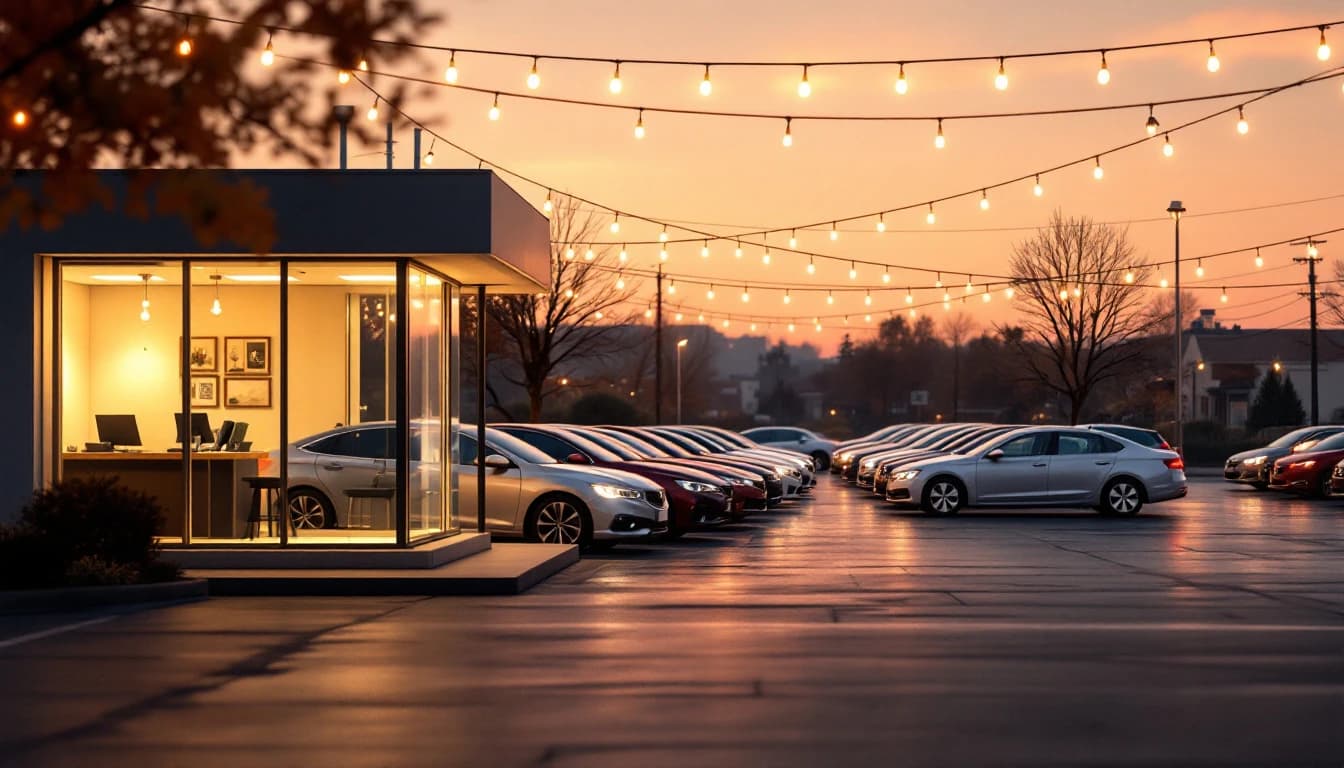
What a Missed Sales Call Really Costs a Buy Here Pay Here Dealer (2026)
Every buy here pay here dealer knows the feeling. It is 1:30 on a Saturday afternoon, both salespeople are walking the lot with customers, the office manager is running a payment, and the phone on the desk rings four times and stops. Nobody thinks much of it. Phones ring; people call back. Except at a BHPH lot, they may not call back — because the person on the other end of that line was not browsing. They needed a car this weekend, they had a down payment in their pocket, and they had four other dealers open in the same tab.
As of July 2026, most independent BHPH operators still treat the phone as an interruption to floor traffic instead of what it actually is: the highest-intent lead channel the store has, and the one with the shortest shelf life. In the buy here pay here model, the store is also the lender, so a single deal's value includes the financed gross on the note, not just the vehicle's front-end margin. When a call goes unanswered, you are not losing a phone conversation. You are losing a down payment, a funded note, and every payment on that note.
This article works the real number. We will profile who is actually calling a BHPH lot, quantify what one missed call costs in down payment and financed gross, look at when the calls come in (spoiler: exactly when your staff is least available), and then do the recovery math — because the economics here are unusually lopsided. One saved deal a month does not just justify 24/7 AI call answering; it typically pays for it several times over. If you want to plug your own numbers in, our missed call cost calculator does the arithmetic live.
The BHPH caller is the most perishable lead in retail automotive
To price a missed call correctly, you have to understand who is on the other end. The typical BHPH buyer profile looks nothing like a franchise-store internet lead who is "gathering information" for a purchase three months out:
- They have an urgent transportation problem. Their car died, got repossessed elsewhere, or failed inspection, and they need wheels to keep a job. The purchase window is measured in days, sometimes hours — not weeks.
- They are subprime or thin-file. They have been declined at franchise stores or know they will be. That means they are calling stores that say yes, and every BHPH lot in a 20-mile radius is on their list.
- They call multiple lots in one session. Because financing is the real product, the buyer's question is not "do you have a 2016 Altima" — it is "will you work with me, and how much down?" They will ask that question to every dealer who answers until someone gives them a workable answer.
- They convert with the first store that engages. Urgency compresses shopping. Lead-response research points the same way: the authors of The Short Life of Online Sales Leads (Harvard Business Review, March 2011) wrote that most companies are not responding nearly fast enough. For a buyer who needs a car by Monday, "speed" means answering the phone the first time it rings.
Put those four traits together and the conclusion is uncomfortable but unavoidable: a BHPH sales call that rings out is not delayed revenue. It is a customer who is, within the hour, sitting across a desk from your competitor. The same dynamic shows up in the locksmith trade, where an urgent caller can tap the next listing within seconds — the speed-to-lead logic has the same shape, just with different dollar values attached.
The anatomy of the loss: down payment plus financed gross
Here is where BHPH differs from almost every other retail business, and why the missed-call math is so much bigger than owners assume.
At a franchise store, a lost sale costs front-end gross and maybe an F&I product or two. At a buy here pay here lot, the store is the lender. A missed deal costs you three stacked layers:
Layer one: the down payment. Whatever your store asks for down, that is immediate cash the store collects at delivery — cash that funds the next acquisition at auction. Miss the call, and that cash walks.
Layer two: the financed gross over the life of the note. This is the engine of the model. The spread between what you have in the unit and what the note collects — even after accounting for defaults and recovery costs — is where BHPH profitability actually lives. That is why one funded note can be worth more to the store than the margin on the car itself.
Layer three: the repeat and referral chain. BHPH customers who pay out a note frequently come back for the next vehicle and send family members. Subprime buyers talk to each other about which lots "actually work with you." A missed first call cuts off that chain before it starts.
Run conservative numbers. Suppose your average deal collects a $1,200 down payment and produces $3,000–$4,500 in expected net financed gross after charge-off allowances. A single missed call that would have converted is a $4,200–$5,700 expected loss. You do not need a heroic close rate on phone leads for this to get expensive fast: in the same example, if your store misses ten sales calls a month and even 15% of those would have bought, that is roughly $6,300–$8,600 a month in expected value ringing out to voicemail. Our deeper breakdown of how much missed calls cost walks the general framework; the BHPH version simply has bigger numbers in every cell.
When the calls come in — and why that timing is brutal
The cruelest part of the missed-call problem at a BHPH lot is when the calls arrive. Sales call volume does not distribute evenly across the week. It clusters:
- Saturday, late morning through afternoon. Payday weekend Saturdays especially. This is also, of course, exactly when your lot has the most walk-in traffic and every salesperson is physically with a customer.
- Weekday evenings, 5–8 PM. People shop for cars after work. Many independent lots close at 6, and even open stores are skeleton-staffed at 7:30 PM.
- Sunday. Most independent BHPH lots are dark on Sunday. The buyer who got paid Friday and needs a car for Monday's shift is calling somebody on Sunday — just not you.
Notice the pattern: call volume peaks precisely when answer capacity bottoms out. Saturday's calls compete with Saturday's ups. Evening calls arrive after the desk is empty. Sunday calls hit a closed store. This is not a staffing failure you can discipline your way out of — it is a structural mismatch between when buyers call and when humans can answer. The same mismatch drives after-hours losses in every urgent-need trade, which is why the after-hours answering problem generalizes so cleanly from locksmiths to lots.
The phone-tied staff problem
Even during open hours with full staff, BHPH stores leak calls for a reason nobody likes to admit: the phone competes with the floor, and the floor always wins.
A salesperson mid-demo will not step away to answer a ring. The office manager running a payment plan review cannot take a sales call properly. The owner is at the auction two mornings a week. So the ring-out rate at a busy independent lot during peak hours is often worse than during quiet hours — the store is most deaf exactly when it is most alive.
And the fallback options all fail in characteristic ways:
- Voicemail — an urgent subprime buyer who reaches voicemail can simply dial the next lot instead of leaving a message.
- "The new guy answers" — an untrained greeter who cannot discuss down payments, cannot check inventory, and cannot book an appointment converts almost nothing and irritates callers.
- A generic answering service — human answering services take messages, read back a generic script, and bill by the minute for the privilege. We compared the models in detail in AI receptionist vs. human answering service, and the structural weaknesses are identical for dealerships.
What the four options actually deliver
Here is the honest comparison for a BHPH store evaluating its phone coverage:
| Voicemail | Hire another staffer | Human answering service | AI receptionist (TheKeyBot) | |
|---|---|---|---|---|
| Answers nights/weekends/Sunday | No | Only scheduled shifts | Usually | Yes, 24/7 |
| Answers during Saturday rush overflow | No | One call at a time | Usually | Yes, more than one call at a time |
| Speaks Spanish | No | Depends on hire | Rarely, costs extra | Yes, native English & Spanish |
| Handles down-payment and credit questions | No | Yes, if trained | No — takes messages | Tells callers what to bring; sends the question to your desk |
| Books test-drive appointments | No | Yes | Sometimes | Yes, straight onto your calendar |
| Sends payment/deposit links | No | Manually | No | Yes, by text during the call |
| Monthly cost | $0 (plus the lost deals) | About $3,170 at the BLS median receptionist wage, plus taxes | Monthly plan, per-minute billing | Core $500 for 500 AI minutes, then 45¢/min; up to $1,200 (Elite) |
| Sick days, turnover, training | — | All three | Their problem, your quality | None |
The staffing column deserves emphasis: a full-time hire who could genuinely cover evenings and weekends costs more per month than the top TheKeyBot plan — and still only answers one call at a time, still takes days off, and still cannot cover 24/7 alone.
What an AI receptionist actually does on a BHPH sales call
The generic pitch for AI answering is "never miss a call." The specific value at a buy here pay here store is what happens during the answered call. A purpose-built system like TheKeyBot's dealership solution handles the full first conversation:
- Answers instantly, every time — first ring, 2 PM Saturday or 9 PM Tuesday, in English or Spanish based on how the caller opens.
- Captures the buyer's request — name, callback number, what they are driving now, what they need, and any down-payment or credit question in their own words for your desk.
- Tells callers what to bring — proof of income, residence, references and their down payment — and leaves down-payment amounts, terms and which units fit their budget to your salespeople.
- Books the appointment (Core, Pro and Elite) — a specific test-drive slot on your calendar through automated scheduling, with an SMS confirmation, which is the single highest-leverage act on the call. A caller with an appointment and a confirmation text shows up at your store instead of continuing to dial.
- Can take a hold deposit — for stores that use them, the system sends a payment link by text mid-call, converting intent into commitment while the caller is still hot.
- Screens the junk — robocalls, warranty spam, and carrier telemarketers get filtered instead of eating staff time, the same spam screening that keeps a locksmith's line clean.
Every real conversation lands as an alert to your team, with an AI transcript on the Pro and Elite plans, so Monday morning starts with a list of booked appointments instead of a voicemail box of hang-ups. The full platform can also send courteous scheduled payment reminders that you write and approve, though TheKeyBot does not make collections calls; that side of the BHPH phone is covered in payment reminders and account calls.
The recovery math: one deal covers the month
Now close the loop on cost. TheKeyBot's plans that book appointments and send payment links run $500 to $1,200 a month: Core is $500 for 500 AI minutes, then 45¢ a minute, and Elite is $1,200 for 2,500 minutes (Lite, at $149, takes messages but does not book). Set that against the expected value of a single recovered deal — the $1,200 down payment plus $3,000–$4,500 in expected financed gross from the earlier example.
In that example, one additional deal per month, recovered from calls you currently miss, is worth roughly 3.5x–11x the plan's monthly fee. Not per year — per month.
And "one additional deal per month" is a deliberately timid target. Suppose a store misses 40 calls a month once you count evenings, Sundays, and Saturday overflow: it needs to convert one of them, or 2.5%, to hit it. Your own call log will show whether the miss rate is a bigger hole in your sales funnel than your ad waste or your web-lead leakage. If you have never audited yours, the missed-call cost explainer is a place to start, and the deeper walkthrough of AI phone answering for buy here pay here dealerships covers implementation specifics.
There is also a defensive angle worth naming: your competitors are adopting this. In a subprime market where a buyer may call several lots, the store that answers every time — instantly, bilingually, with an appointment offer — will structurally out-convert the stores that answer some of the time. The phone is becoming a solved problem for the operators who choose to solve it, which changes the baseline for everyone who does not.
The bottom line
A missed sales call at a buy here pay here dealership is one of the most expensive routine events in small-business retail, because the caller is urgent, pre-committed to buying somewhere, and worth a down payment plus years of financed gross — not just a front-end margin. Those calls cluster on Saturdays, evenings, and Sundays, exactly when human answer capacity is at its weakest, and every fallback short of true 24/7 coverage (voicemail, greeters, message-taking services) fails the caller in a way that sends them to a competitor. The economics of fixing it are unusually clear-cut: at $500–$1,200 a month for the plans that book, an AI receptionist that recovers even one deal a month pays for itself several times over in this article's example, and everything past that first deal is margin you were previously donating to the lot down the street. The phone is not an interruption to your sales process. At a BHPH store, it is the sales process — and it should never ring out again.
Frequently asked questions
How much does a missed call cost a car dealership?
It depends on your own deal economics, so work it as an example. If a converted BHPH deal is worth a $1,200 down payment plus $3,000–$4,500 in expected financed gross over the note, and 10–15% of missed sales calls would have bought, each missed call represents roughly $420–$860 in expected value — and the true figure is higher once repeat purchases and referrals are counted.
Why don't BHPH customers just leave a voicemail or call back?
BHPH buyers often skip the voicemail because they are urgent, multi-store shoppers who need a vehicle within days, not weeks. The typical caller has an immediate transportation problem and a list of dealers to try, so when one line rings out they simply dial the next lot, and the first business to engage them usually wins the deal.
When do buy here pay here dealerships miss the most calls?
BHPH dealerships miss the most calls on Saturday afternoons, weekday evenings, and Sundays — the exact windows when buyer call volume peaks. Saturday calls compete with walk-in floor traffic that keeps salespeople off the phone, evening calls arrive after the desk empties, and Sunday calls hit closed stores. The structural problem is that call volume and staff availability move in opposite directions, which is why added headcount alone never fully closes the gap.
Can an AI receptionist really handle a car sales call?
An AI receptionist can handle the first sales conversation at a BHPH dealership: greeting the caller in English or Spanish, capturing their vehicle need, explaining what documents to bring, taking down-payment and financing questions as a message for your desk, and, on Core, Pro and Elite, booking a specific test-drive appointment with an SMS confirmation. It does not replace your closer — it makes sure every caller reaches the appointment stage instead of reaching your competitor.
How much does TheKeyBot cost for a dealership?
TheKeyBot's Lite plan is $149 per month for message-taking only (100 calls included, then 50¢/min); it does not quote or book. The plans that book appointments are $500 per month on Core (500 AI minutes, 45¢/min overage), $750 per month on Pro (1,000 minutes, 40¢/min), and $1,200 per month on Elite (2,500 minutes, 35¢/min), with no setup fees. In this article's example, recovering a single deal per month is worth roughly 3.5 to 11 times the subscription cost. Full plan details are at https://www.thekeybot.com/pricing.
Is 24/7 AI answering better than hiring another salesperson to cover the phone?
For phone coverage specifically, 24/7 AI answering outperforms an additional hire on both cost and coverage. A full-time employee costs a full wage plus payroll taxes, covers only scheduled shifts, answers one call at a time, and turns over; TheKeyBot's plans that book appointments cost $500–$1,200 a month, answer around the clock in two languages, more than one call at a time, and never call in sick. Salespeople are for closing deals on the lot — not for babysitting a phone line.
Sources
- Harvard Business Review — The Short Life of Online Sales Leads (March 2011) — lead response research cited on response speed.
- U.S. Bureau of Labor Statistics — Receptionists, Occupational Outlook Handbook — 2025 median pay, used for the staffing cost row.
About the Author
TheKeyBot Team is dedicated to helping locksmiths grow their businesses through AI automation and smart technology. With years of experience in the locksmith industry, our team provides actionable insights and proven strategies.