How to Stop Losing Lockout Calls After 9 PM: The Night Call Playbook
Night lockout calls go wrong at the same few points: no answer, no price, nobody free to go, or a callback the caller ignores. A call flow, word-for-word scripts and a one-page night policy you can set up this week.
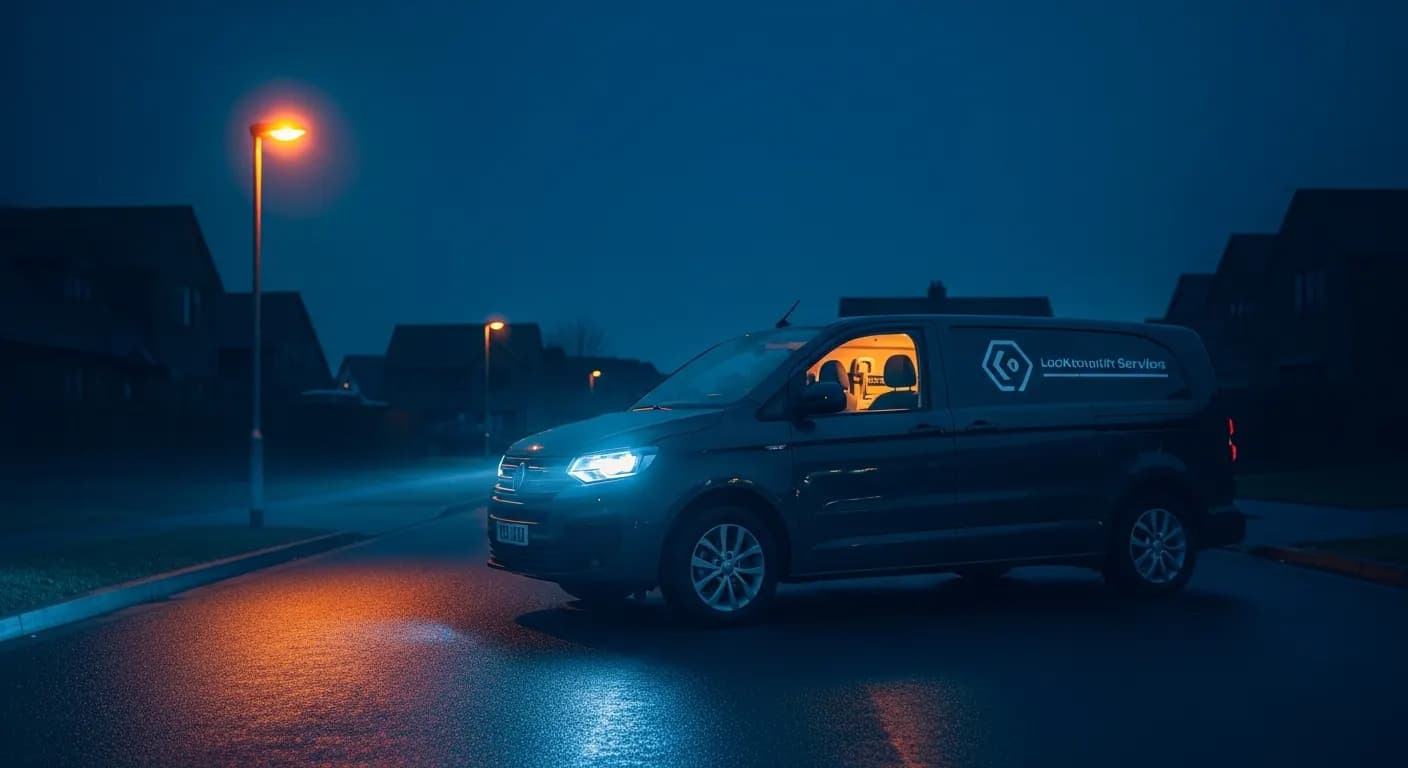
You stop losing lockout calls after 9 p.m. by deciding, before dark, exactly what happens on each one: what answers, what the caller hears in the first 30 seconds, what the night price is, who gets woken up, and what to say if nobody can go. Night calls go wrong at a handful of predictable points, and each one has a fix you can write down. This playbook gives you the call flow, word-for-word scripts in English and Spanish, and a one-page night policy.
Key takeaways
- Write the night policy first. Which jobs you take after 9 p.m., the night price, the night service area, who's on call and the backup. A receptionist, human or AI, can only follow rules that exist.
- Use one call order every time: business name, safety, what's locked and where, the total price, the arrival window, proof of ownership. If a child or vulnerable person is in a car, the first instruction is 911, as Colorado's transportation department tells the public.
- Quote the whole price on the call. Connecticut tells consumers to ask for a full price upfront, including service and travel costs. A night caller who can't get a number keeps dialing.
- Have a script for "nobody can go." A clear no with a morning slot or another option beats a promise nobody keeps.
- Make your ads and listings match your nights. Google's Local Services Ads run on an "All day" schedule by default, and its ranking page says missed calls may hurt your responsiveness.
Where do lockout calls get lost after 9 p.m.?
Follow a night call from ring to job and there are five places it can leak, and a shop can have several at once.
| Leak | What happens | The fix in this playbook |
|---|---|---|
| Nobody answers | The phone rings out or hits voicemail, and the caller dials the next listing | Answer at every hour, or stop advertising those hours |
| Answered, but no price | "Someone will call you back with a price" sends the caller shopping | A night price in your price book, said in one sentence |
| Priced, but nobody free | The caller waits, nobody comes, and you've earned a bad review | An on-call roster with a backup, and a "nobody can go" script |
| Dispatched with bad details | The technician drives to the wrong lot or the wrong car | A location script and a fixed summary format |
| The callback is ignored | You call back from a number the caller doesn't know, or one flagged as spam | Call and text from the number they dialed |
The first leak is the one people talk about; our post on why lockout callers hang up on voicemail covers how to measure it from your own call log. The other four happen even when someone picks up, and they're cheaper to fix.
What should your night policy decide before the first call?
Put these decisions on one page. The middle column is an example only; fill in your own.
| Decision | Example answer (illustration only) | Why it matters |
|---|---|---|
| When "after hours" starts and ends | 9 p.m. to 7 a.m., and all of Sunday | Decides which price the receptionist quotes |
| Jobs you take at night | Car, house and business lockouts; no rekeys or installs | Everything else gets a morning slot |
| Night service area | A smaller radius than daytime | A 50-minute drive at 2 a.m. may not be worth it |
| Night price | Your after-hours fee and trip charge, as a total by job type | So the total fits in one sentence |
| Who's on call | A named technician each night, plus a backup | Nobody should find out at 1 a.m. that it's their night |
| Safety triggers | Child, vulnerable adult or pet inside; someone hurt; a break-in | These go to 911 or the police first |
| If nobody can go | The exact words, plus the options you offer | A clear answer protects your reviews |
| Payment at night | Card, cash or both, and whether you take a deposit | The caller needs to know before the technician arrives |
Two of these deserve extra thought. The night price has to be a total that includes the trip, because that's what callers are told to ask for; our after-hours pricing guide covers how shops set it. And the on-call roster needs a backup and an escalation rule for when the on-call technician doesn't respond; see our on-call rotation guide.
What should the first 30 seconds of a night call sound like?
Same order, every call. Here it is word for word, then in Spanish.
1. Name and line. "Thanks for calling [business name], after-hours line."
Use the business name, never a generic "Locksmith." Minnesota's Attorney General tells consumers to beware of companies that answer the phone with a general phrase like "locksmith" rather than a business name.
2. Safety. "Are you somewhere safe right now? Is anyone, or any pet, locked inside?"
If a child or vulnerable adult is in a car: "Please hang up and call 911 now. We can still come, but 911 comes first." Colorado's Department of Transportation tells anyone who sees a child or other vulnerable passenger alone in a parked car to call 911 and get help immediately, and the National Weather Service shows a car reaching 94.3°F in just over 2 minutes. Our car lockout guide and child or pet protocol cover the rest of that call.
3. What and where. "Is it a car, a house or a business? What's the address, or the nearest cross streets?" For a car: "What's the year, make and model?" For a house: "Which door, and is it a regular lock or a keypad?"
4. The total. "For a car lockout tonight at that location, it's [total], which includes the trip and the after-hours charge."
5. The window. "A technician can be there in about [window]. You'll get a text with the name of the company and the technician."
6. Proof. "They'll need to see a photo ID and something showing the car or the address is yours. If it's inside, they'll check it once the door is open."
7. Confirm. "Can I text the details to this number? Is there another number in case your battery dies?"
The same script in Spanish
In the Census Bureau's 2018-2022 survey, Spanish was spoken by 61.1% of the people who spoke a language other than English at home, so a night line in many markets needs this version too:
- "Gracias por llamar a [nombre del negocio], línea de servicio nocturno."
- "¿Está en un lugar seguro? ¿Hay alguien, o alguna mascota, encerrado adentro?" Si hay un niño o una persona vulnerable en el carro: "Por favor, cuelgue y llame al 911 ahora. Nosotros también podemos ir, pero primero llame al 911."
- "¿Es un carro, una casa o un negocio? ¿Cuál es la dirección, o las calles más cercanas?"
- "Para abrir su carro esta noche en esa dirección, el total es [precio], con el viaje y el cargo nocturno incluidos."
- "Un técnico puede llegar en unos [tiempo]. Le vamos a mandar un texto con el nombre de la compañía y del técnico."
- "El técnico va a necesitar ver una identificación con foto y algo que muestre que el carro o la casa le pertenece. Si está adentro, lo revisa cuando abra la puerta."
- "¿Le mando los detalles por texto a este número? ¿Tiene otro número por si se le acaba la batería?"
Have a native speaker read your version before you use it; our guide to bilingual call answering covers the details that trip up translations.
How do you quote a lockout at night without losing the caller?
The rule regulators give consumers is simple. Connecticut's Department of Consumer Protection, in its July 2026 locksmith alert:
"When calling the business, ask for a full price upfront, including service and travel costs."
The same alert tells consumers to ask for a written quote before the work begins, so text the total along with the confirmation.
Three habits keep a night quote from becoming an argument:
- Say one number. "It's [total]," not "it's [base] plus a trip charge plus an after-hours fee." The parts can go on the receipt.
- Say what could change it, before it changes. "If the lock has to be drilled or replaced, the technician will explain why and give you the price first." ALOA warns that a locksmith who immediately goes to drilling is often a scammer, so an honest shop says this up front.
- Offer a real alternative when the price is the problem. A caller who is safe at a friend's house may prefer a morning visit at your day rate. A driver with roadside coverage may want to call it first; California's consumer agency tells drivers locked out of a car to call their auto insurance company first. Letting them choose earns more trust than a hard sell at midnight.
If your receptionist can't quote, because it's voicemail, an answering service without your price list, or a message-only AI, the caller hears "someone will call you back with a price." That's the second leak in the table above, and it's worth fixing before anything else.
Who gets woken up, and what do they need to see?
The on-call technician should be able to decide from one text whether to get dressed. Use the same format every time:
| Field | Example |
|---|---|
| Job and urgency | Car lockout, caller safe, no one inside |
| Vehicle or lock | 2019 Honda Civic, push-to-start |
| Exact location | Gas station lot, corner of Route 9 and Elm, near the air pump |
| Price quoted | [total], after-hours rate |
| Proof of ownership | ID and registration inside the car |
| Caller | Name, number, backup number, language |
| Notes | Phone battery low; text before calling |
Wake the technician for booked jobs, not for every ring. Price shoppers, wrong numbers and "what are your hours" calls can wait for the morning summary.
This is where the setup you choose matters. Disclosure: TheKeyBot, which publishes this blog, makes an AI receptionist. Our call handling page describes the full receptionist this way: "Only wake technicians for confirmed bookings," with the closest available technician notified by SMS with the job details. On the message-only Lite plan, the Lite page says each message arrives on your phone with live lockouts flagged urgent and quote-shoppers marked planning-ahead, so you decide who to wake. Lite is $149 a month and doesn't quote or book; Core is $500 a month with 500 AI minutes and adds scheduling and GPS dispatch (pricing). Core, Pro and Elite include a 14-day free trial, and Lite's first 5 answered calls are free.
What do you say when nobody can go?
Some nights the on-call technician is already on a job across town, or sick, or doesn't answer. The worst outcome is a caller who waits for a technician who never comes. Give the receptionist these words:
"I'm sorry, we don't have a technician who can reach you tonight. I can book you for [first morning slot], or if you have roadside assistance through your insurance or a motor club, they may be able to help sooner. Which would you like?"
Then do three things: log the call as a lost night job so you can count them, follow up in the morning if they booked, and look at your roster if it keeps happening. If you refer night work to another shop, set that up in daylight; our guide to overflow and subcontract calls covers how.
How should night callbacks and texts work?
Sometimes a call is missed anyway, and the callback is your last chance at the job. At night, two things work against you.
People screen unknown numbers. In a 2020 Pew Research Center survey, 67% of U.S. adults said their general practice is not to answer calls from unknown numbers but to check voicemail if one is left, and only 19% said they generally answer them.
Spam labels. The FTC explains that call-labeling services show words like "spam" or "scam likely" on the screen. A callback from a technician's personal cell starts with both problems.
So: call back from the number the customer dialed, leave a short voicemail with your business name and what they called about, and send a text. TheKeyBot's Lite page says callers who hang up before leaving details automatically get a text asking what they need. Whatever you use, make sure a missed night call produces some message within minutes, not at 8 a.m. Our guide to fixing "Spam Likely" callbacks covers the labeling side.
Do your ads and listings match the hours you answer?
It's easy to advertise nights you don't cover. Google's Local Services Ads scheduling page says the default schedule type is "All day," which runs your ad 24 hours a day, 7 days a week. Its ad ranking page lists responsiveness among the factors in the ad auction and says "Missed calls may negatively affect your responsiveness"; the same page notes that message and booking leads give customers more ways to reach you, especially during nights and weekends when you can't answer the phone.
Your Google Business Profile hours work the same way. Google's guidelines say to provide your regular customer-facing hours of operation. If you list yourself as open 24 hours, a 2 a.m. caller expects someone to answer. Either cover the hours you advertise or change the schedule and the listing to match what you actually do. Our Local Services Ads guide covers the ad side.
Which answering setup fits your nights?
This playbook is about the call itself, and it works with any setup: you on call with a phone by the bed, a technician rotation, an answering service, or an AI receptionist. What changes between them is cost, sleep and whether the person or system answering can quote your prices and book. Our companion post on capturing after-hours leads without hiring compares those staffing options side by side, and our money math for mobile locksmiths shows how to price the decision with your own numbers.
Your night setup checklist for this week
- Write the one-page night policy from the table above, including the backup technician.
- Put the night totals in your price book for car, house and business lockouts, with trip and after-hours fees included.
- Record or load the 30-second script in English and, if your callers need it, Spanish.
- Set the dispatch text format and test it with your on-call technician.
- Write the "nobody can go" script and the first morning slot you'll offer.
- Check your Local Services Ads schedule and Google Business Profile hours against the hours you actually answer.
- Call your own line at 11 p.m. and 2 a.m. with a car lockout and a house lockout, and listen to what a customer gets. Our trial test-call script has more scenarios.
Frequently Asked Questions
What should a locksmith say first on an after-hours call?
Your business name, then a safety question: "Are you somewhere safe, and is anyone or any pet locked inside?" If a child or vulnerable adult is in a car, tell the caller to hang up and call 911 first, then take the details.
How should I quote a lockout at night?
Give one total that includes the trip charge and the after-hours fee, and say what could change it before it changes. Connecticut's consumer agency tells callers to ask for a full price upfront, including service and travel costs, so a night caller who can't get a number will keep dialing.
What if no technician can go out tonight?
Say so plainly and offer options: the first morning slot, or the caller's roadside assistance if they have it. Log the call as a lost night job, and fix the roster if it keeps happening.
Why don't customers answer when I call them back at night?
Many people screen unknown numbers: in a 2020 Pew Research Center survey, 67% of U.S. adults said they usually don't answer them but check voicemail if one is left. Call back from the number they dialed, leave a short voicemail with your business name, and send a text.
Do Google Local Services Ads run overnight?
By default, yes. Google says the default schedule type is "All day," which runs your ad 24 hours a day, 7 days a week, and its ranking page says missed calls may negatively affect your responsiveness.
Can an AI receptionist handle night lockout calls?
It can answer every call and follow the same script, but check what it can do with the call. TheKeyBot Lite ($149 a month) answers in English and Spanish and sends you the message without quoting or booking, while Core ($500 a month) quotes from your price sheet and adds scheduling and dispatch.
Sources
- Connecticut Department of Consumer Protection, "Consumer Alert: Locked Out? Be Wary of Scammers Posing as Locksmith Technicians" (July 16, 2026): https://portal.ct.gov/dcp/news-releases-from-the-department-of-consumer-protection/2026-news-releases/be-wary-of-scammers-posing-as-locksmith-technicians
- Colorado Department of Transportation, "Look Before You Lock warns Colorado parents about the dangers of hot cars, even in cooler weather" (August 22, 2025): https://www.codot.gov/news/2025/august/look-before-you-lock-dangers-of-hot-cars
- National Weather Service, "Children, Pets and Vehicles": https://www.weather.gov/safety/heat-children-pets
- Minnesota Attorney General, "Out-of-State Companies Posing as Local Locksmiths": https://www.ag.state.mn.us/Consumer/Publications/HiringALocksmith.asp
- U.S. Census Bureau, language spoken at home, 2018-2022 ACS (December 7, 2023): https://www.census.gov/newsroom/press-releases/2023/language-at-home-acs-5-year.html
- ALOA, "How to Spot a Scammer Locksmith": https://www.aloa.org/consumers/howtospotascammer
- California Department of Consumer Affairs, "Consumer Tips for Hiring a Locksmith": https://www.dca.ca.gov/publications/locksmith_tips.shtml
- Pew Research Center, "Most Americans don't answer cellphone calls from unknown numbers" (December 14, 2020): https://www.pewresearch.org/short-reads/2020/12/14/most-americans-dont-answer-cellphone-calls-from-unknown-numbers/
- Federal Trade Commission, "How To Block Unwanted Calls": https://consumer.ftc.gov/articles/how-block-unwanted-calls
- Google Local Services Help, "About ad scheduling": https://support.google.com/localservices/answer/9251526?hl=en
- Google Local Services Help, "About ad rankings": https://support.google.com/localservices/answer/7527305?hl=en
- Google Business Profile Help, "Guidelines for representing your business on Google": https://support.google.com/business/answer/3038177?hl=en
- TheKeyBot pricing: https://www.thekeybot.com/pricing
About the Author
TheKeyBot Team is dedicated to helping locksmiths grow their businesses through AI automation and smart technology. With years of experience in the locksmith industry, our team provides actionable insights and proven strategies.