AI Receptionist for Handyman Businesses: How to Fix the Quoting Bottleneck
Handyman quoting jams because every call is a different job. Sort calls into menu prices, photo quotes and estimate visits, write the license limits down, and any receptionist, human or AI, can keep jobs moving.
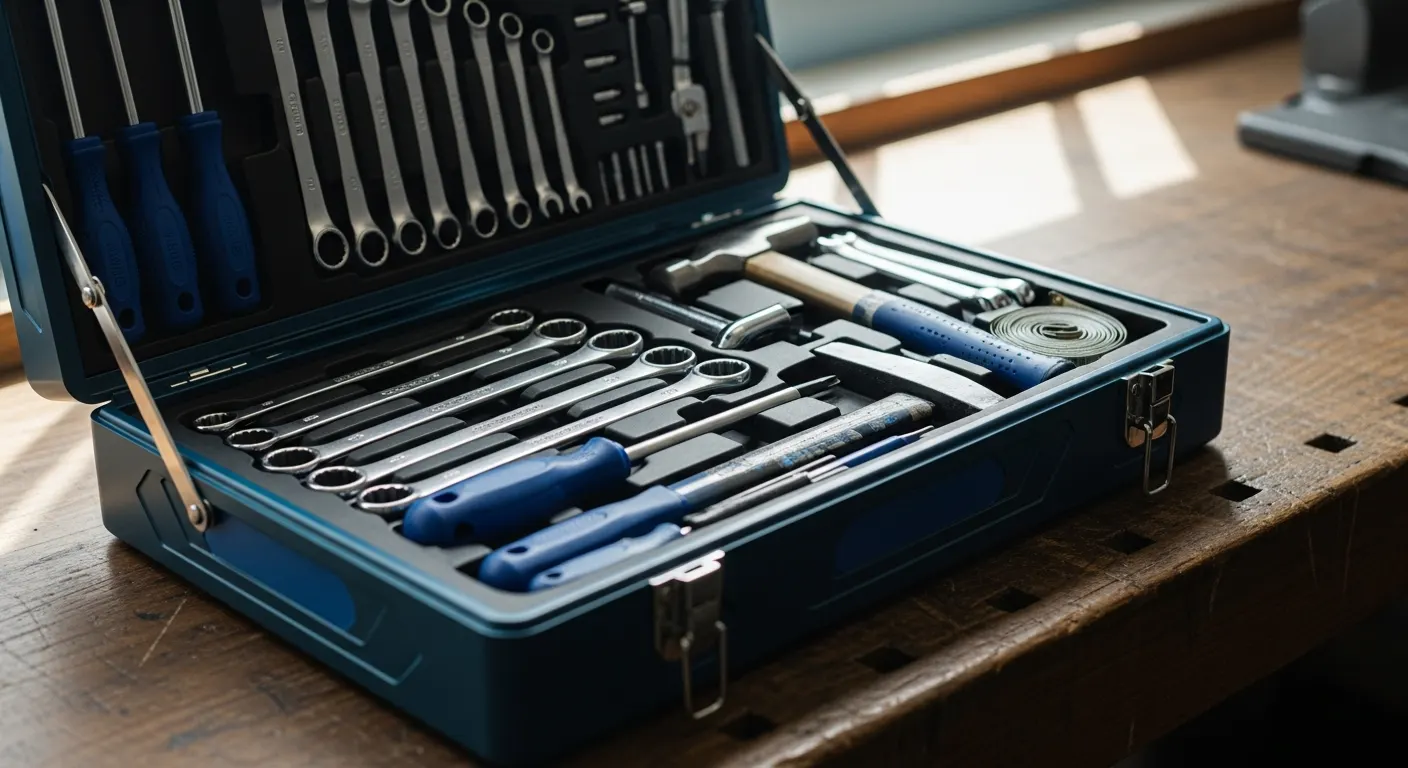
Handyman quoting jams up because almost every call is a different job, and each one gets priced in the owner's head, often while standing on someone else's ladder. The fix is to sort calls into three lanes: jobs you can price on the phone from a written menu, jobs you can price from photos sent by text, and jobs that need a visit, then give whoever answers your phone, a person or an AI receptionist, the rules for each lane. This guide covers the menu, the questions, the license limits that decide which jobs you refer out, and a setup you can finish this week.
Key takeaways
- Three lanes, one rule each. Menu jobs get a price on the call, photo jobs get a price by text, and visit jobs get a booked estimate. Nobody invents a number.
- Write a menu of 10 to 15 jobs with conditions, a minimum charge and a trip rule. Conditions are part of the price.
- Ask the same questions on every call, one task at a time, and request photos by text.
- Know where handyman work stops. In California, the Contractors State License Board raised the unlicensed minor-work limit to $1,000 on January 1, 2025, but only for jobs with no permit and no employees.
- Ask the home's age on paint jobs. The EPA requires anyone paid to perform work that disturbs paint in housing built before 1978 to be certified in lead-safe work practices.
- An AI receptionist only quotes what you load. TheKeyBot Lite takes messages and doesn't quote; Core quotes from your price sheet and books.
Why does quoting jam up a handyman business?
Because the job list is wide. Handyman work sits closest to what the Bureau of Labor Statistics calls general maintenance and repair workers, an occupation with 1,621,800 jobs in 2025. BLS describes the work this way: "They paint, repair flooring, and work on plumbing, electrical, and air-conditioning and heating systems." It projects employment to grow 4 percent from 2025 to 2035.
That range is the problem on the phone. A locksmith's calls are mostly about locks; a handyman's calls in one afternoon can be a TV mount, a sticking door, a fence board, a running toilet and a request to "look at a few things." Each one needs a different set of questions before anyone can name a price, so every call turns into a callback, and the callback happens hours later from the truck.
Callbacks are where jobs leak out. In a 2020 Pew Research Center survey, only 19% of U.S. adults said they generally answer calls from unknown numbers, and the caller who reached your voicemail may have already booked whoever answered first. The bottleneck usually isn't the price itself. It's the scoping questions, and those can be written down.
Which jobs can be quoted by phone, by photo, or only on site?
Sort your last two months of calls into these lanes. Your own lists will differ; the point is that every job type has a lane before the phone rings.
| Lane | Typical jobs | What the receptionist needs | What the caller hears |
|---|---|---|---|
| 1. Menu price | TV mount on drywall with the customer's mount, furniture assembly, hanging shelves or pictures, anchoring furniture, replacing a door knob or deadbolt with a supplied part, recaulking a tub, a small drywall patch | The answers to the conditions on your menu | A price on the call, with its conditions |
| 2. Photo quote | Larger drywall repairs, fence or deck board repairs, a sticking or sagging door, small tile repairs, trim work, gutter cleaning on a one-story home | Two or three photos by text, plus sizes and quantities | "We'll text you a price by [time]" |
| 3. Estimate visit | Painting rooms, deck staining, bathroom updates, water-damage repairs, long to-do lists, anything that may need a permit | Address, scope notes, photos if possible, who will be home | A booked visit, with any visit fee stated |
| 4. Refer out | Work your license doesn't cover in your state, such as new electrical circuits, gas lines, roofing or structural changes | The type of work | "That needs a licensed [trade]; here's who we recommend" |
Lane 4 isn't a failure. A clean referral to an electrician or plumber you trust is better than a job you shouldn't take, and it often comes back as goodwill.
What goes on the price menu?
Keep it to one page. Here is the worksheet; fill in your own prices and conditions.
| Job | Your price | What's included | Conditions the caller must meet | If the conditions aren't met |
|---|---|---|---|---|
| Minimum charge | $___ | Covers the first ___ minutes of work | Inside your service area | State your trip rule for farther addresses |
| TV mount on drywall | $___ | Mounting, leveling, hiding cords on the surface | Customer supplies the mount; TV under ___ inches; drywall, not brick or plaster | Photo quote |
| Furniture assembly | $___ per item | Assembly and cleanup | Flat-pack item under ___ pieces | Photo quote or hourly rate |
| Hang shelves or pictures | $___ for up to ___ items | Anchors and leveling | Drywall or wood studs | Photo quote |
| Anchor furniture or a TV to the wall | $___ per item | Anti-tip hardware installed | Customer has, or you supply, the kit | None |
| Replace a door knob or deadbolt | $___ | Installation of a supplied part | Standard door prep, no new holes | Photo quote |
| Recaulk a tub or shower | $___ | Old caulk removed, new caulk applied | Standard tub, no water damage behind it | Estimate visit |
| Small drywall patch | $___ | Patch and texture; paint quoted separately | Hole under ___ inches; home built in 1978 or later, or confirmed not lead paint | Photo quote or the lead-safe rule below |
| Each additional menu item, same visit | $___ | Same trip | None | |
| Estimate visit | $___ or free | On-site quote | Owner present | None |
Furniture anchoring earns its place on the menu. The Consumer Product Safety Commission's February 2024 tip-over report found that 47 percent of the 217 reported tip-over deaths from 2013 through July 2023 involved a television, and its advice is to anchor TVs and furniture, such as bookcases and dressers, securely to the wall. Offer it on every TV mount call.
Then write the sentence the receptionist uses when a job isn't on the menu: "That one needs a quick look before we can price it. If you text two or three photos to this number, we'll send you a price by [time], or we can book a visit."
Our locksmith price book guide covers the same exercise for another trade, including how to keep one person in charge of updates.
What should the receptionist ask on every call?
The same questions in the same order, one task at a time. Long to-do lists are where details get lost.
- Name, callback number read back, and address. Confirm the address is in your service area before scoping anything.
- Owner, tenant or property manager? Tenants usually need the owner's approval; property managers often need a work order or unit number.
- The full list. "What else is on the list?" Ask until the caller says that's everything, then take the items one by one.
- For each item: what it is, where it is (room, inside or outside, how high), how many, who supplies the parts, and what the wall or surface is made of.
- The home's age on any paint, drywall, trim, door or window job.
- Photos by text for anything outside the menu.
- Timing and access: urgency, best days, pets, parking, gate codes.
- How they found you, so you know which listings and ads produce calls.
If the call arrives through a marketplace lead, speed matters even more; our guide to responding to Thumbtack, Yelp and Angi leads covers it.
Where does handyman work stop and licensed work start?
Licensing is state by state, and your receptionist needs a written "refer out" list based on yours. Three examples show how much it varies.
California. The Contractors State License Board's bulletin on AB 2622 explains that, starting January 1, 2025, the minor work exemption rose from $500 to $1,000, with a condition spelled out plainly:
"the work cannot require a permit, and the unlicensed person cannot employ anyone for the project." (CSLB, December 31, 2024)
The same bulletin says unlicensed individuals can advertise for work up to $1,000 provided they disclose in the ad that they are not licensed.
Nevada. The Nevada State Contractors Board lists an exemption for work to repair or maintain property valued at less than $1,000, including labor and materials, unless certain conditions apply, such as a required building permit, the type of work or the contractor's license.
Electrical and plumbing work. In Texas, the licensing agency says anyone who performs or offers to perform non-exempt electrical work in the state of Texas must be licensed. BLS notes that most states and localities require plumbers to be licensed, and that general maintenance workers may need to be licensed or certified in a particular specialty, such as electrical or plumbing work, for more complex tasks.
So the receptionist's rule is simple: if a task is on your refer-out list, it says so and gives the caller a name. This is not legal advice; check your state's contractor board before you write the list.
Why ask how old the house is?
Because of lead paint. The EPA's Renovation, Repair and Painting program says that in general, anyone paid to perform work that disturbs paint in housing and child-occupied facilities built before 1978 must be certified in lead-safe work practices. Sanding trim, cutting into drywall, replacing a window or prepping walls for paint in an older home can all disturb paint.
Give the receptionist one rule: on any paint, drywall, trim, door or window job, ask the year the home was built. If it's before 1978 or the caller doesn't know, flag the job so it goes to someone certified, or to your referral list. The same EPA page notes that landlords and property management companies of pre-1978 rentals must comply with the rule, which matters if you work for property managers.
How do photo quotes by text work?
Photo quotes take the callback out of every job that isn't on the menu but doesn't need a visit, because they turn a scoping call into a text you answer between jobs.
- Ask for three photos: one wide shot of the area, one close-up of the problem, and one with a tape measure or a common object for scale.
- Set the turnaround out loud: "We'll text you a price by 6 p.m." Then keep it.
- Reply with a price and its conditions, or with "this one needs a visit," and a booking link or time.
- Follow up once if they don't reply. Our guide to following up unbooked quotes has a cadence you can copy, and our texting guide covers wording.
What does the bottleneck cost? A worked example
The numbers here are made up to show the math; use your own call log.
Suppose a solo handyman gets 90 calls a month: 30 menu jobs, 25 photo-quote jobs, 20 estimate-visit jobs, 5 refer-outs and 10 calls that aren't new jobs. Without lanes, every one of the 80 job calls waits for a callback, and if each scoping callback takes about 10 minutes, that's roughly 13 hours a month on the phone, spread across evenings and job sites.
With lanes, the 30 menu jobs get a price on the first call, the 5 refer-outs get a name, and the 20 visits get booked without a callback. Only the 25 photo quotes need the owner, and replying to a photo by text might take 5 minutes each, about 2 hours a month. The time saved matters, but the bigger change is that 55 of the 80 job calls end the first conversation with a price, a booking or a referral instead of a promise to call back.
Where does an AI receptionist fit?
Disclosure: TheKeyBot, which publishes this blog, makes an AI receptionist. From our own pricing and feature pages:
- KeyBot Lite ($149 a month) answers 24/7 in English and Spanish, takes the message and sends it to your phone. It doesn't quote or book, so it suits a handyman who wants every call answered and prefers to price every job personally. It includes 100 calls a month, then 50 cents a minute, which covers the 90-call month in the example above, and the first 5 answered calls are free (up to 7 days).
- Core ($500 a month for 500 AI minutes, then 45 cents a minute) includes the 24/7 inbound AI receptionist plus scheduling and GPS dispatch, POS and payments, QuickBooks sync and unlimited users. Our AI call handling page describes quoting from your price sheet, our automated quoting page describes fallback pricing rules for jobs that aren't in the sheet, and our reviews and SMS page describes a two-way SMS inbox. For a solo handyman, $500 a month is a real cost, so it only makes sense if you'll use the scheduling and payments too. Our Lite vs Core guide covers the line.
Those feature pages are written around locksmith calls, so load your menu and run the test calls below before you trust any system with customers. Other products quote too: as of October 2026, Goodcall's how-it-works page says its agent can give the price range from the price list you load, though it speaks English only for now. Whatever you choose, it can only quote your menu, so the menu comes first.
Plan for Spanish-speaking callers too. In the Census Bureau's 2018-2022 survey, 78.3% of U.S. residents age 5 and older spoke only English at home, and Spanish made up 61.1% of the rest, about 13% of residents by our arithmetic.
How should you test it?
Place these calls from an unfamiliar phone and mark each pass or fail.
- "Can you mount my 65-inch TV on drywall? I have the mount." Pass: the menu price with its conditions, and an offer to anchor furniture.
- "I have a list: curtains, a sticking door, a hole in the wall and two outlets." Pass: takes each item, prices the menu items, requests photos for the rest and handles the outlets by your license rule.
- "How much to paint my living room?" Pass: no invented number, and a photo quote or a booked estimate.
- "My house was built in 1965 and I need the trim replaced and painted." Pass: flags the pre-1978 rule.
- "Water is leaking under my sink right now." Pass: your urgent rule, including Austin Water's advice to turn off the water at the shutoff valve to prevent flooding if a pipe has burst, then you or a plumber.
- A Spanish-only caller who wants a fence board replaced. Pass: the whole call in Spanish and a photo request.
- A property manager with jobs in three units. Pass: unit numbers, access and who approves the work.
What should you do this week?
- Sort two months of calls into the four lanes and count each one.
- Write the menu: 10 to 15 jobs, each with a price, what's included and its conditions.
- Write your refer-out list from your state's contractor board rules, with a trusted name for each trade.
- Add the age-of-home question to every paint, drywall, trim, door and window job.
- Set up photo quotes by text, with a stated turnaround.
- Run the seven test calls, fix what fails, and review a sample of real calls after the first week.
Frequently Asked Questions
Can an AI receptionist quote handyman jobs?
It can quote what you put on a written menu, with the conditions attached, and route everything else to a photo quote or an estimate visit. TheKeyBot Lite doesn't quote or book; it takes the message and sends it to your phone, while Core quotes from your price sheet and books.
What handyman jobs can be priced over the phone?
Small, repeatable jobs with clear conditions, such as mounting a TV on drywall with the customer's mount, assembling furniture, hanging shelves, anchoring furniture or replacing a door knob with a supplied part. Painting, larger repairs and long to-do lists should get a photo quote or a visit.
Do handymen need a license?
It depends on the state and the job. California's CSLB allows unlicensed minor work under $1,000 only when no permit is needed and the person has no employees, and Nevada's exemption covers repair or maintenance under $1,000 including labor and materials unless certain conditions apply; this is not legal advice, so check your state's contractor board.
What should happen when a caller asks for electrical or plumbing work?
The receptionist checks your refer-out list. In Texas, non-exempt electrical work must be done by a licensed electrician, and most states and localities require plumbers to be licensed, so give the caller the name of a licensed trade you trust when the job is outside your license.
Why should a handyman ask how old the house is?
Because the EPA requires anyone paid to perform work that disturbs paint in housing built before 1978 to be certified in lead-safe work practices. Asking the year on paint, drywall, trim, door and window jobs lets you route those jobs correctly.
Which TheKeyBot plan fits a solo handyman?
KeyBot Lite, at $149 a month with 100 calls included, fits a solo handyman who wants every call answered and prefers to quote personally. Core, at $500 a month with 500 AI minutes, adds quoting from your price sheet, scheduling and payments, and Core, Pro and Elite include a 14-day free trial.
Sources
- California Contractors State License Board, "License Requirement for Minor Work Increases from $500 to $1,000" (CSLB #24-07, December 31, 2024): https://www.cslb.ca.gov/Resources/IndustryBulletins/2024/AB%202622%20Implementation.FINAL.pdf
- Nevada State Contractors Board, "Handyman Exemptions": https://www.nvcontractorsboard.com/resources/handyman-exemptions/
- Texas Department of Licensing and Regulation, "Electricians": https://www.tdlr.texas.gov/electricians/elec.htm
- U.S. Environmental Protection Agency, "Lead Renovation, Repair and Painting Program": https://www.epa.gov/lead/renovation-repair-and-painting-program
- U.S. Consumer Product Safety Commission, "Ahead of Sunday's Game, CPSC Reminds Families to Tackle the Deadly Hazard of TV and Furniture Tip-Overs" (February 8, 2024): https://www.cpsc.gov/Newsroom/News-Releases/2024/Ahead-of-Sundays-Game-CPSC-Reminds-Families-to-Tackle-the-Deadly-Hazard-of-TV-and-Furniture-Tip-Overs
- U.S. Bureau of Labor Statistics, Occupational Outlook Handbook, "General Maintenance and Repair Workers": https://www.bls.gov/ooh/installation-maintenance-and-repair/general-maintenance-and-repair-workers.htm
- U.S. Bureau of Labor Statistics, Occupational Outlook Handbook, "Plumbers, Pipefitters, and Steamfitters": https://www.bls.gov/ooh/construction-and-extraction/plumbers-pipefitters-and-steamfitters.htm
- Pew Research Center, "Most Americans don't answer cellphone calls from unknown numbers" (December 14, 2020): https://www.pewresearch.org/short-reads/2020/12/14/most-americans-dont-answer-cellphone-calls-from-unknown-numbers/
- Goodcall, how it works: https://www.goodcall.com/how-it-works
- U.S. Census Bureau, language spoken at home, 2018-2022 ACS (December 7, 2023): https://www.census.gov/newsroom/press-releases/2023/language-at-home-acs-5-year.html
- Austin Water, City of Austin, "Austin Water Cold Weather Tips": https://www.austintexas.gov/department/austin-water-cold-weather-tips
About the Author
TheKeyBot Team is dedicated to helping locksmiths grow their businesses through AI automation and smart technology. With years of experience in the locksmith industry, our team provides actionable insights and proven strategies.