Plumbing Water Heater Calls (2026) — What Intake Must Capture Before You Roll a Truck
The water heater call is the most common high-ticket call a plumbing company takes and the one most often mishandled on the phone. This is the identification set that decides truck stock and price, the symptom split that decides urgency, and the safety script that has to run before any of it.
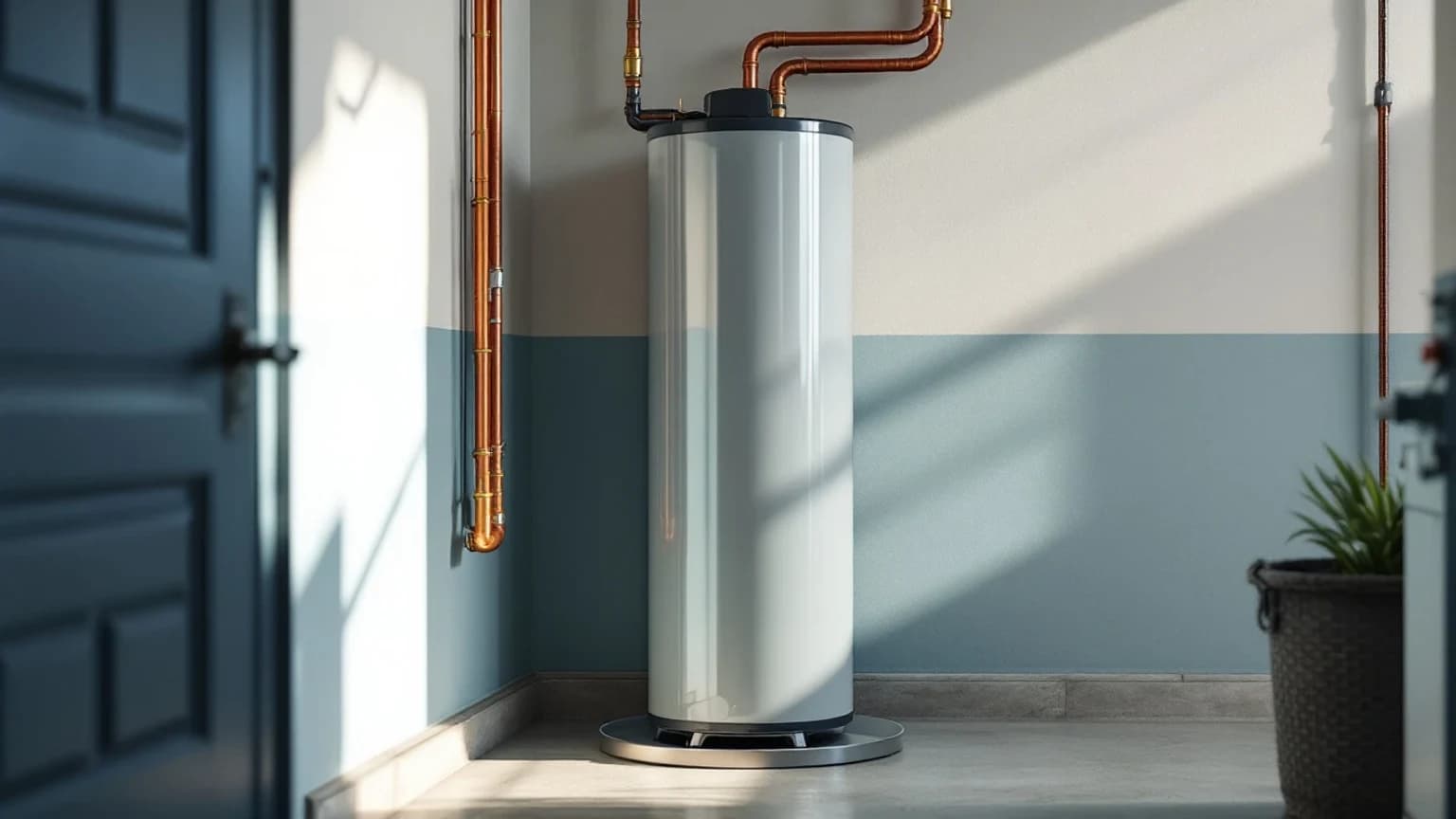
Plumbing Water Heater Calls (2026) — What Intake Must Capture Before You Roll a Truck
Ask any plumbing owner which call type produces the most revenue per ring and the answer is almost always the water heater. Ask which call type gets butchered most often on the phone and the answer is the same one.
As of September 2026, the ordinary shape of a water heater call at an independent shop is this. Somebody rings at 6:40 PM to say they have no hot water. Whoever picks up writes down a name, a number, and the words "water heater," and promises a callback. The next morning a technician drives out, discovers a 75-gallon gas unit in an attic with no pan, no accessible drain, and a vent that has to be reworked, and now the job that was quoted loosely on the phone is a different job entirely. Or worse, nobody picks up at all, the caller dials the next result, and the whole thing is somebody else's revenue by 6:45.
Neither failure is about the technician. Both are decided by what was captured, or not captured, in the ninety seconds before anyone drove anywhere. That is what a plumbing answering service is for, and it is where the generic ones fall down — they take a message that says "no hot water, call back," which is the same message you would have gotten from voicemail.
The fastest way to judge this is to hear it answer for your own company. Go to the instant demo, enter your business details, and the AI calls your phone within about a minute answering as your company. No signup, first demo free. Everything below is the detail behind that call.
Why the water heater call is the one that gets mishandled
Three things collide on this call at once, and generic scripts handle none of them.
First, the ticket is large. Between the unit, the fittings, the code work, the haul-away, and the labor, a water heater replacement is frequently the biggest single-visit invoice a residential plumbing shop writes in a given week. A lost water heater call is not a lost drain snake.
Second, the job varies wildly on inputs the caller can see but will never volunteer. Tank versus tankless changes the whole scope. Gas versus electric changes the parts, the venting, and often the technician you send. Attic versus garage changes the labor hours and the risk. None of that reaches you if the intake is a name and a callback number.
Third, the call arrives at exactly the moment the caller is least equipped to be organized about it. People discover a water heater problem when they get in the shower, which is early morning or evening, which is when a small shop's phone is least likely to be answered by anyone with a pen. The overall economics of that gap are laid out on the missed-call cost page, and the same evening-cluster pattern shows up in every trade that fixes things people use at home, including the model-number problem described in the appliance repair intake guide.
The identification set that decides truck stock and price
There is a short, fixed list of facts that turns "no hot water" into a job you can plan. A trade-configured intake walks it every single time, in plain language, without sounding like a form.
Tank or tankless. The single biggest fork. A useful phrasing for a caller who does not know the vocabulary is whether it looks like a large cylinder or a flat box mounted on the wall. Callers get this right almost every time when it is asked that way, and almost never when they are asked "is it a tankless unit."
Fuel type — gas, electric, or propane. Ask whether there is a flame or pilot, or whether it plugs in or is wired. Propane is worth naming explicitly rather than folding into gas, because rural and unincorporated addresses run on it and the fittings and regulator situation are different.
Capacity in gallons. On a tank unit this is usually printed on the label and is the number that decides what you put on the truck. Forty, fifty, and seventy-five are the common residential sizes, and the difference between them is a different unit, a different price, and sometimes a different vehicle.
Approximate age. Not to the month — just roughly. Callers usually know within a couple of years, or know when they bought the house. Age is the field that quietly decides the entire repair-versus-replace conversation later, which is why it must be captured even though the phone is not the place to have that conversation.
Brand. One word, off the front of the unit. It narrows the parts question enormously, and combined with age it tells your parts person most of what they need before anyone rolls.
Where the unit is in the home. Attic, garage, utility closet, hallway closet, crawlspace, basement, or outside. This deserves its own section below, because it changes labor more than any other single answer.
Whether there is a drain pan under it, and whether that pan has a drain line. A pan with a line to the exterior and a pan sitting there full of water are two different jobs, and on a replacement it is often the difference between a straightforward swap and additional work.
Vent type on gas units. Does a metal flue pipe go up through the roof, or do white plastic pipes run out through a wall. That answer separates an atmospheric unit from a power-vent or condensing unit, and getting it wrong is the classic way to arrive with the wrong replacement.
Warranty status. Is the unit still under a manufacturer warranty, was it installed by another company, and did the caller register it. The receptionist captures the answers and does not adjudicate them. Telling a caller they are or are not covered is how a shop inherits an argument it did not need.
Address, access, and who the caller is. Homeowner, tenant, property manager, or landlord — the authorization question, asked up front, so nobody discovers at the door that the person who called cannot approve the work.
Every one of those is a fact the caller can supply from standing in front of the unit with a phone in their hand. None of them require diagnosis, and none of them require the receptionist to know anything about plumbing beyond how to ask.
Location in the home is the field that moves the money
If a shop only added one field to its existing intake, this is the one.
An attic install is a different job from a garage install with the same unit in the same city. Getting a 50-gallon tank up a pull-down ladder, across joists, and back down again is labor, risk, and often a second body. The old unit has to come out full or be drained first, and if the pan and secondary drain are not right, an attic replacement can turn into remediation work on the ceiling below.
A crawlspace install is its own category of unpleasant, and shops price it that way. A hallway or utility closet may require the door frame to come off or the unit to be tipped through a space it barely fits. A basement is usually the easiest, right up until the stairs are narrow and turn. Outdoor and exterior-mounted tankless units introduce freeze considerations that never come up indoors.
None of this is exotic knowledge to a plumber. The point is that the caller knows the answer, the answer takes four seconds to give, and a generic answering service will never ask for it — so your technician discovers it on arrival, with the customer standing there expecting the number they heard on the phone.
The symptom split that decides urgency
The identification set tells you what the unit is. The symptom tells you when it has to be seen, and whether it goes on tonight's board or Thursday's.
No hot water at all on an electric unit points one direction, on a gas unit another, and either way it is uncomfortable rather than dangerous. It is a same-day-if-possible call, not a drop-everything call.
Lukewarm or not enough hot water is usually a slower failure or a sizing issue, and it is the most schedulable symptom on the list. It is also the one most likely to be a customer who has been living with it for weeks and finally called.
Water on the floor around the unit is the fork inside the fork. Water pooling around the base of a tank is a very different problem from a drip at a fitting, and the intake question that separates them is whether the water is coming from the tank body itself or from a connection at the top. Either way the follow-up is whether it is contained in a pan or running across a finished floor.
The relief valve discharging — the temperature and pressure valve dribbling or dumping — is the symptom callers describe most vaguely and the one that deserves the most attention. It can indicate excessive pressure or temperature, and it is not a symptom to schedule casually for next week without capturing detail.
A pilot that will not stay lit on a gas unit is a repeat-visit generator if it is handled as a message. Capture how long it stays lit, whether it has been relit before, and whether anything changed recently.
A rumbling or popping tank is the classic sediment description, and it is a flush-or-replace conversation that depends almost entirely on the age you captured earlier.
| Symptom the caller reports | Likely urgency | What intake must capture | Same-day or scheduled |
|---|---|---|---|
| No hot water at all | Elevated but not hazardous | Fuel type, age, capacity, whether the breaker tripped or the pilot is out, household size | Same-day if a slot exists |
| Lukewarm or runs out quickly | Routine | Capacity, age, how many people and fixtures, how long it has been happening | Scheduled |
| Water pooling around the base of the tank | High — property damage in progress | Whether water is from the tank body or a fitting, pan and drain present, flooring and finished space below, shutoff located | Same-day, treated as containment first |
| Relief valve discharging | High — capture detail, do not diagnose | Whether it is dripping or dumping, how hot the water is, any recent pressure changes, discharge piped to a safe location | Same-day |
| Pilot will not stay lit | Moderate | How long it stays lit, prior relights, any gas smell, unit age and brand | Same-day if a slot exists |
| Rumbling or popping tank | Routine | Age, capacity, whether it has ever been flushed, brand | Scheduled |
The genuine emergencies, and the script that runs before intake
Most water heater calls are service calls. A few are not, and on those the receptionist stops being a receptionist.
A gas smell. The instruction is to leave the building, not to operate any switch or appliance on the way out, and to call the gas utility or 911 from outside. No address collection first, no questions about capacity or brand, no scheduling. The intake resumes later or does not happen at all.
Water actively flooding a finished space. This is a property-damage emergency running on a clock. The instruction is to shut the cold water supply to the unit, or the main if they cannot find the unit shutoff, and only then to talk about scheduling.
Scalding-hot water. If a caller reports water hot enough to burn, that is not a comfort complaint. It is captured as urgent, with a caution about running hot taps and about children and elderly household members, and it is escalated rather than booked casually for the day after tomorrow.
Around all three sits the rule that matters more than any of them. The receptionist never coaches a repair. It does not walk anyone through relighting a pilot, does not suggest turning up a thermostat, does not tell a caller to open a relief valve to test it, and does not tell anyone their unit is safe to keep running. It is a message-taker with a safety script, not a technician on the phone. Where those boundaries sit in general — what an AI intake should refuse, and what it should escalate to a human — is set out in what an AI receptionist cannot do.
Repair versus replace — capture the inputs, skip the debate
Every plumbing shop has the same unbillable phone conversation on repeat. The caller has an eleven-year-old tank, they have read three contradictory articles, and they want to be told on the phone whether to fix it or replace it.
That conversation cannot be had responsibly by whoever answers the phone, because the answer depends on the actual failure, the current cost of the unit, the condition of the venting and connections, and what the customer values. An intake that attempts it either guesses or talks the customer out of a job you would have wanted.
The correct behavior is narrow and firm. Capture age, capacity, fuel, brand, symptom, and whether anyone has worked on it before, then move on. Those six fields let your technician have the repair-versus-replace conversation in ninety seconds with real information, at a time you choose, with a customer already on the schedule.
The photograph of the data plate is the highest-value step in the call
Every fact in the identification set above is printed on the label on the side of the unit. Model number, serial, capacity, fuel, input rating, and usually a manufacture date code.
So the single most valuable thing an intake can do is ask the caller to photograph that label and text it in before the truck rolls. It takes the caller ten seconds, it removes every transcription risk from a phone call with a bad connection, and it hands your parts person the exact unit rather than an approximation of it. A photo of the plate is worth more than four minutes of a caller reading letters aloud, and it means the tech who arrives has already seen what they are replacing.
The same applies to the install location. A photo of the unit in place — the closet it sits in, the flue above it, the pan under it — answers questions nobody thought to ask. Asking for these two photos is one of the cheapest changes a shop can make to its intake, and it costs nothing to configure.
What all of this asks of an answering service
Almost nothing on this page is unusual for a plumber. It is unusual for whoever is answering the phone.
A generic answering service is measured on politeness and speed, not on whether the message is actionable, and the operator has no reason to know that a power-vent unit is a different job. A voicemail box captures a symptom and a callback number if you are lucky. A technician's cell phone captures all of this beautifully, right up until both hands are under a sink.
A trade-configured AI receptionist runs the same sequence on every call, at 6:40 PM and at 2 AM, and on the second and third call arriving at the same moment as the first. It asks tank or tankless, fuel, capacity, age, brand, location, pan, vent, and warranty; it records the symptom in the caller's own words; it runs the safety escalations ahead of any message-taking; it asks for the plate photo; and it drops the whole structured message into your Telegram within seconds of hangup, with the recording attached. The full picture of that flow for plumbing specifically is on the AI receptionist for plumbers page and in the plumbing AI receptionist explainer, and the broader vendor comparison for trades is in the virtual receptionist alternative guide.
Stated plainly, because the product argument depends on being straight about it. On the $149 KeyBot Lite plan the receptionist takes structured messages. It does not book onto your calendar and it does not dispatch. In the optional "Your prices" step of setup you can upload your price list or type it in, and once you confirm the figures it will state those exact prices when asked — your trip charge, your after-hours rate, your listed flat-rate items — word for word, never negotiated and never invented. Anything not on your list gets "the team will confirm the exact price on the callback," and Lite will not build a quote for a replacement nobody has looked at or put a truck on a board. Live quoting, booking, and dispatch on the call itself are the full platform — Core, Pro, and Elite, laid out on the pricing page — and that is a conversation to have with us at the contact page. How the whole product is positioned for the trade is on the plumber answering service page.
Permits, expansion tanks, and code — describe them, do not assert them
One caution that belongs in every water heater script.
Many jurisdictions require a permit and an inspection for a water heater replacement, and requirements around expansion tanks, seismic strapping, drain pans, pan drain routing, and discharge piping vary by jurisdiction and by the age of the installation. That variation is real, and it is exactly why the phone is the wrong place to make promises about it.
The right behavior is to capture what exists — is there a pan, is there an expansion tank visible near the unit, what does the venting look like — and to tell the caller that the technician confirms code requirements for their address on site. Never state a specific code requirement as universal on a phone call. It is the kind of confident sentence that turns into a dispute at the inspection, and it costs nothing to avoid.
The bottom line
The water heater call is the highest-value call most plumbing shops take and the easiest one to lose twice — once by not answering it and once by answering it with a message that says nothing. The fix is not a better phone habit; it is a fixed intake that runs every time. Tank or tankless, gas or electric or propane, gallons, age, brand, where in the home, pan and drain, vent type, warranty status, and the symptom in the caller's own words, with a plate photo texted in before dispatch and a safety script that runs ahead of all of it for gas smells, active flooding, and scalding water. A trade-configured AI receptionist runs that sequence on every call including the three that land at once, costs $149 a month with 100 calls included and 50 cents a minute after, goes live in about ten minutes, keeps your existing number, and speaks English and Spanish in the same call. Before the next evening rush, spend thirty seconds proving it — enter your company at the demo and let it call you back as your own receptionist.
Frequently asked questions
What should a plumbing answering service ask on a water heater call?
It should capture tank or tankless, fuel type as gas or electric or propane, capacity in gallons, approximate age, brand, where the unit is installed in the home, whether there is a drain pan and a pan drain line, the vent type on gas units, warranty status, and the symptom in the caller own words. Those fields decide truck stock, labor, and price before anyone drives, and they are all visible to a caller standing in front of the unit.
Which water heater symptoms are actually emergencies?
Active flooding into a finished space, any gas smell, and scalding-hot water are the three that stop intake and start a safety script. A gas smell means leave the building without operating any switch and call the gas utility or 911 from outside. Flooding means shut the cold supply to the unit or the main and worry about scheduling second. No hot water and a lukewarm supply are urgent to the customer but are service calls, not hazards.
Why does the install location matter so much on a water heater call?
Because it changes labor and risk more than any other single answer. An attic replacement means getting a full tank down a pull-down ladder and often a second body on the job, a crawlspace install is priced differently by almost every shop, and a tight hallway closet may require the unit to come through a space it barely fits. The caller can answer it in four seconds, and a generic message taker will never ask.
Should the phone tell a customer whether to repair or replace a water heater?
No, and a good intake will not try. Repair versus replace depends on the actual failure, the current cost of the unit, the condition of the venting and connections, and what the customer values, none of which are knowable from a phone description. What the intake does instead is capture age, capacity, fuel, brand, symptom, and any prior work, so a technician can have that conversation in ninety seconds with real information at a time you choose.
How much does an answering service for plumbers cost with TheKeyBot?
KeyBot Lite is $149 per month with 100 calls included and 50 cents per minute after that, no contract, with the first 5 answered calls free on a 7-day trial. Live quoting, booking, and dispatch on the call itself come with the full platform: Core is $500 per month for 500 AI minutes, then 45 cents per minute; Pro is $750 with 1,000 minutes; and Elite is $1,200 with 2,500 minutes. Core, Pro and Elite each include a 14-day free trial. Complete plan details are at https://www.thekeybot.com/pricing.
Can I hear it answer a water heater call for my own plumbing company first?
Yes — go to https://www.thekeybot.com/try?industry=plumbing, enter your business details, and the AI calls your phone within about a minute answering as your own company. No signup is required and the first demo is free, so you can judge the intake questions, the safety handling, and the voice on a real call before spending anything.
About the Author
TheKeyBot Team is dedicated to helping locksmiths grow their businesses through AI automation and smart technology. With years of experience in the locksmith industry, our team provides actionable insights and proven strategies.